Grinding or Squealing
Brake noise can indicate worn pads, damaged rotors, hardware problems, or brake components that need attention.
Call Us:
615-946-2079 

Brake inspections, brake pads, rotors, calipers, brake lines, brake fluid, ABS diagnosis, and complete braking system repair.
If your brakes are squealing, grinding, pulling, vibrating, or not stopping like they should, do not wait. Brake problems usually get worse, and your braking system is too important for guesswork.
At Rock Bridge Automotive Repair, we diagnose brake problems before replacing parts. We serve Bethpage, Gallatin, Portland, Castalian Springs, Westmoreland, and the surrounding Sumner County area.
Safe Stops Start Here
Your brakes are not just another maintenance item. They are the system that protects you, your passengers, and the people around you every time you drive.
The braking system is one of the most important safety systems on any car or truck. At Rock Bridge Automotive Repair, we inspect and repair brake systems with the experience that comes from decades of hands-on work.
We repair brake pads, rotors, calipers, brake shoes, brake drums, wheel cylinders, master cylinders, brake boosters, brake lines, brake hoses, brake fluid problems, ABS concerns, and electronic stability-control related brake issues.
We do not believe in selling parts just because a vehicle has a brake noise. Brake noises, soft pedals, warning lights, vibration, pulling, and uneven wear can come from different causes. We inspect the system and explain what actually needs to be corrected.
A proper brake inspection looks at more than the brake pads. We inspect the system as a whole because brake problems can involve mechanical, hydraulic, electronic, and suspension-related issues.
Most modern vehicles use disc brakes on the front, and many use disc brakes at all four wheels. Disc brakes may look simple, but proper repair requires more than installing pads.
Rotors must be inspected for thickness, wear, heat damage, pulsation, grooves, rust, and runout. Calipers must move freely. Hardware must be clean and properly installed. Slide pins must be serviced correctly. Pads must match the vehicle and driving conditions.
When disc brakes are installed poorly, the result can be noise, vibration, uneven pad wear, sticking calipers, overheated brakes, and shortened repair life. Learn more on our disc brake repair page.
Drum brakes are still used on many vehicles, especially on rear brake systems. Drum brakes include shoes, springs, adjusters, wheel cylinders, drums, parking brake parts, and small hardware pieces that must all work together.
Drum brake repair takes experience. If the adjusters are not working, the hardware is weak, the wheel cylinders leak, or the shoes are installed incorrectly, the vehicle may have poor braking, brake drag, noise, or a weak parking brake.
We have serviced thousands of drum brake systems over the years. You can learn more on our drum brake repair page.
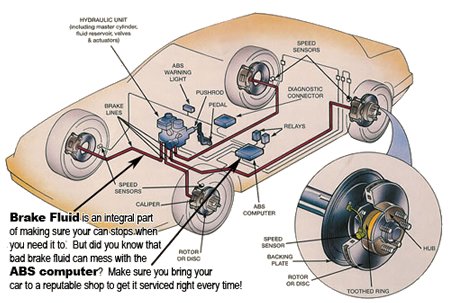
Hydraulic brakes depend on brake fluid to transfer pressure from the brake pedal to the wheel brakes. A leak, air in the system, old fluid, contaminated fluid, a failing hose, or a master cylinder issue can change how the brake pedal feels.
A soft pedal should never be ignored. Brake fluid leaks and hydraulic problems can become dangerous quickly. Related pages include brake fluid service, brake line repair, and brake master cylinder repair.
A brake booster helps reduce pedal effort. When a booster fails, the pedal may feel hard and the vehicle may require much more force to stop. Some vehicles use vacuum boosters, while others may use hydraulic or electric assist systems.
Hard pedal problems and soft pedal problems are usually different diagnostic paths. That is why brake diagnosis matters before replacing parts. Learn more about brake booster repair.
Modern braking systems are connected to computer-controlled safety systems. ABS helps reduce wheel lockup during hard braking. Traction control and electronic stability control may use brake pressure to help control wheel slip or vehicle movement.
An ABS light, traction control light, or stability-control warning can be related to wheel speed sensors, wiring, hub assemblies, tone rings, brake hydraulic problems, module concerns, or related system faults. We diagnose these systems instead of guessing.
Related pages include ABS repair, electronic stability control repair, and advanced braking systems.
Brakes must be balanced. Too much rear brake pressure can cause rear wheel lockup. Too little rear brake contribution can increase stopping distance. Older vehicles may use proportioning valves or load-sensing devices, while newer vehicles may rely more heavily on ABS and electronic brake control.
Brake balance is one of those areas where experience matters. The problem may not always be the pad or rotor that looks most obvious.
Cheap brake work often skips the details. That can mean poor pad selection, reused hardware, unserviced slide pins, ignored fluid problems, incorrect drum brake adjustment, damaged rotors, seized calipers, or warning lights that are never diagnosed.
When brake work is done poorly, the repair may not last. Worse, the vehicle may not stop correctly. At Rock Bridge Automotive Repair, we focus on the real problem and the proper repair.
We will inspect your brakes carefully, explain what we find, and recommend the repairs your vehicle actually needs. We are not interested in scare tactics, guesswork, or selling every part in the catalog.
We want your vehicle to stop safely, your repair to last, and your confidence in the vehicle restored.
Brake Problems We Diagnose
Brake noise can indicate worn pads, damaged rotors, hardware problems, or brake components that need attention.
A soft pedal can point to air, fluid leaks, old brake fluid, failing hoses, master cylinder problems, or other hydraulic issues.
Pulling, shaking, or pulsation may come from uneven braking force, rotor problems, caliper issues, tires, or suspension concerns.
ABS, traction control, and stability-control lights should be diagnosed because modern brake systems are connected systems.
Why Choose Rock Bridge Automotive Repair?
We bring old-school mechanical understanding together with modern diagnostic equipment. That matters because brake problems are not always obvious. A noise may not be just pads. A warning light may not be just a sensor. A soft pedal may not be just fluid.
Our goal is simple: find the real problem, repair it correctly, and help you understand what your vehicle needs before you spend money.
Need Brake Repair?
If your brakes are noisy, weak, leaking, vibrating, pulling, or showing warning lights, schedule an inspection before the problem gets worse.
Call (615) 946-2079Brake Repair Questions and Answers
Common signs include squealing, grinding, vibration, pulling while braking, a soft brake pedal, a brake warning light, ABS warning light, or reduced stopping power.
Grinding brakes are unsafe. Grinding can mean the brake pads are worn through and metal parts may be damaging the rotors or other brake components.
A soft or spongy brake pedal may be caused by air in the hydraulic system, old brake fluid, a brake fluid leak, failing brake hoses, master cylinder problems, or other hydraulic brake issues.
Yes. We inspect and diagnose the brake system before recommending repairs so you are not sold unnecessary parts.
Yes. We diagnose ABS, traction control, and electronic stability control concerns along with hydraulic and mechanical brake problems.
Rock Bridge Automotive Repair provides brake repair for drivers in Bethpage, Gallatin, Portland, Castalian Springs, Westmoreland, and surrounding Sumner County communities.
Local Brake Repair
We provide brake repair, brake inspections, brake line repair, brake fluid service, ABS diagnosis, and advanced braking system repair for drivers in Bethpage, Gallatin, Portland, Castalian Springs, Westmoreland, and throughout Sumner County, Tennessee.
Brands We Service







© Copyright 2026, Rock Bridge Automotive Repair | Honoring America’s 250th Anniversary