Bouncing After Bumps
If the vehicle keeps moving after a bump or dip, the shocks or struts may no longer be controlling suspension movement correctly.
Call Us:
615-946-2079 

Bouncing, nose diving, cupped tires, rough ride, leaking struts, broken springs, strut mounts, and suspension noises diagnosed correctly.
Shocks and struts are not just comfort parts. They help control tire contact, braking stability, body roll, steering response, and the way your vehicle handles rough Tennessee roads.
Rock Bridge Automotive Repair provides shock replacement, strut replacement, complete strut assembly replacement, and suspension inspections for drivers near Gallatin, Bethpage, Portland, Castalian Springs, and Sumner County, Tennessee.

Ride Control and Suspension Safety
A vehicle with worn shocks or struts may still drive, but it may not stop, turn, ride, or handle the way it should.
Many customers think shocks and struts are only there to make a vehicle ride smoother. Ride comfort is part of their job, but the bigger job is control. Shocks and struts help keep the tires planted on the road after bumps, dips, turns, braking, and rough pavement.
When shocks or struts wear out, the vehicle may bounce, float, nose dive, sway, lean in corners, wear tires unevenly, or feel unstable on rough roads. A worn strut mount, broken spring, damaged bearing plate, or low-quality quick strut assembly can also create clunks, pops, rattles, and steering complaints.
At Rock Bridge Automotive Repair, we do not guess just because a vehicle rides rough. We inspect the complete suspension system, including shocks, struts, mounts, springs, control arms, ball joints, tie rods, sway bar links, bushings, tires, wheel bearings, and related components before recommending repairs.
We believe in installing dependable parts that make sense for the vehicle. The cheapest shock or strut assembly is not always a bargain if it rides poorly, makes noise, fails early, or causes the customer to pay for the same job twice.
Symptoms We Look For
Suspension problems often show up gradually. By the time the ride feels terrible, tires and other parts may already be suffering.
If the vehicle keeps moving after a bump or dip, the shocks or struts may no longer be controlling suspension movement correctly.
Weak front struts or shocks can allow excessive weight transfer during braking, making the vehicle feel unstable or poorly controlled.
Worn ride-control parts can allow the tire to bounce instead of staying planted, which may contribute to cupped or uneven tire wear.
Oil leakage from a shock or strut is a common sign that the internal seal has failed and the part may no longer control movement correctly.
Noises can come from strut mounts, bearing plates, worn bushings, sway bar links, loose hardware, broken springs, or worn suspension parts.
A broken spring, weak spring, damaged mount, or suspension issue can make one corner of the vehicle sit lower than the others.
Repair Options
The right repair depends on the vehicle design, the condition of the spring and mount, the mileage, the noise complaint, and the quality of the available parts.
Shocks are commonly used on trucks, SUVs, and rear suspension systems. They control suspension movement but usually do not carry the vehicle weight.
Struts are structural suspension parts used on many front-wheel-drive vehicles and modern cars. They often affect alignment and steering geometry.
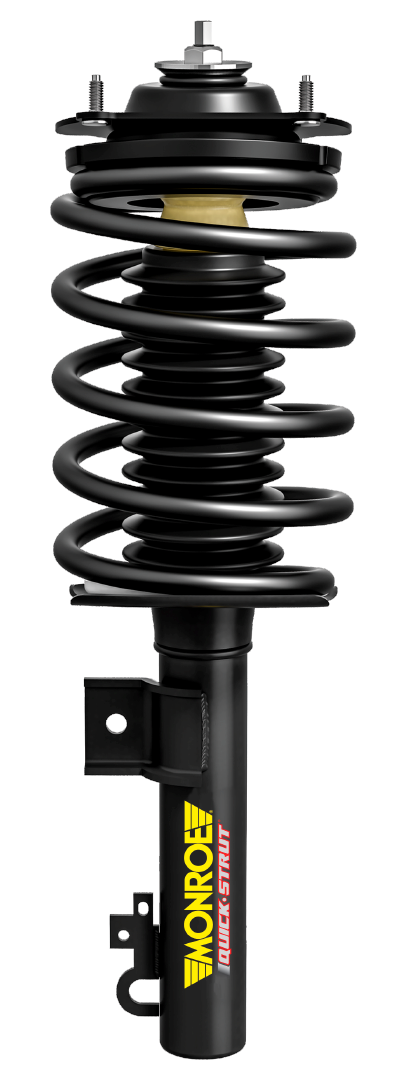
A complete or loaded strut assembly usually includes the strut, coil spring, upper mount, bearing plate, boot, and jounce bumper already assembled.
Worn upper mounts or bearing plates can cause popping, binding, clunking, steering noise, or poor return-to-center feel.
Broken or weak springs can affect ride height, tire clearance, handling, and safety. Rust, age, and road impact can all contribute to spring failure.
Some vehicles use electronic shocks, adaptive dampers, air suspension, or ride-control sensors that require diagnosis before parts are replaced.
Quality Matters
A cheap complete strut assembly can be tempting because it looks like a fast, inexpensive repair. Sometimes a complete assembly is the right choice, especially when the spring, mount, boot, and bearing are worn or when the original assembly is badly rusted. But quality still matters.
Low-quality struts may ride poorly, make noise, sit at the wrong height, fail early, or not control the vehicle the way they should. A strut that does not dampen correctly can allow extra tire movement, poor road contact, more body motion, and customer complaints that the vehicle still does not feel right.
The goal is not to sell the most expensive part. The goal is to use a dependable part that fits correctly, lasts, and gives the vehicle back the control it was supposed to have.
Our Inspection Process
A rough ride or suspension noise is not always caused by shocks or struts. Ball joints, tie rods, sway bar links, control arm bushings, strut mounts, wheel bearings, tires, brakes, and even loose hardware can create symptoms that sound similar.
We inspect for leaks, looseness, broken springs, torn boots, damaged mounts, abnormal tire wear, rusted or broken hardware, excessive movement, steering play, suspension binding, and parts that are no longer holding the vehicle where it belongs.
If struts are replaced, many vehicles should be aligned afterward. We do not currently perform alignments in-house, but we can identify and repair worn suspension and steering parts before an alignment is performed. Aligning a vehicle with loose or worn parts is usually wasted money.
Related Auto Repair Services
These supporting service pages help connect shocks and struts to your complete suspension repair structure.
For clunks, rattles, rough ride, ball joints, tie rods, control arms, sway bars, bushings, and general suspension problems.
Loose steering, wandering, tire wear, and front-end clunks may involve ball joints, tie rods, drag links, or steering linkage.
Control arm bushing wear can cause clunks, braking pull, alignment movement, and uneven tire wear.
Small bump rattles, body roll, and rough-road clunks often come from sway bar links or stabilizer bar bushings.
Worn shocks and struts can contribute to cupped tires, chopped tire wear, steering instability, and alignment complaints.
Preventive inspections help find worn suspension and steering parts before they damage tires or create safety concerns.
Schedule Shock or Strut Service
If your vehicle bounces, nose dives, rattles, rides rough, leaks from a strut, or wears tires unevenly, call Rock Bridge Automotive Repair for a proper suspension inspection.
Call (615) 946-2079 Contact Rock Bridge Automotive RepairQuestions and Answers
Common signs include bouncing after bumps, nose diving while braking, excessive body roll, rough ride, leaking shocks or struts, cupped tire wear, clunking noises, and a vehicle that feels unstable on rough roads.
A complete strut assembly, sometimes called a loaded strut or quick strut, usually includes the strut, coil spring, upper mount, bearing plate, boot, and bumper already assembled as a unit.
Not always. A complete assembly can be a good repair when the mount, bearing, spring, or hardware is worn or rusty. But quality matters. A cheap assembly may ride poorly, make noise, or wear out early.
Yes. Worn shocks or struts can allow the tire to bounce instead of staying controlled against the road, which can contribute to cupped, chopped, or uneven tire wear.
Most vehicles should be aligned after strut replacement because struts can affect steering and alignment angles. Worn front-end parts should be repaired before the alignment is performed.
Yes. A broken coil spring can affect ride height, handling, tire clearance, and suspension safety. Broken springs should be inspected and repaired before the vehicle is driven long distances.
Local Shock and Strut Repair
Rock Bridge Automotive Repair provides shock replacement, strut replacement, complete strut assembly replacement, and suspension repair for local drivers throughout the Gallatin, Tennessee area.
Rock Bridge Automotive Repair
From worn struts and leaking shocks to broken springs, noisy mounts, and rough ride complaints, we inspect the whole suspension system and recommend repairs that make sense.
Brands We Service










© Copyright 2026, Rock Bridge Automotive Repair | Honoring America’s 250th Anniversary