Clicking While Turning
A worn outer CV joint commonly clicks or pops during turns, especially when accelerating from a stop or pulling out of a driveway.
Call Us:
615-946-2079 

Clicking while turning, torn CV boots, grease leaks, vibration under acceleration, axle noise, and drivetrain clunks diagnosed correctly.
CV axles transfer engine power to the wheels while allowing the suspension to move and the wheels to turn. That is a tough job, especially on hills, curves, rough roads, and long Tennessee rock driveways.
Rock Bridge Automotive Repair diagnoses and repairs CV axles, drive axles, torn CV boots, clicking joints, vibration complaints, and related drivetrain problems for drivers near Gallatin, Bethpage, Portland, Castalian Springs, and Sumner County.
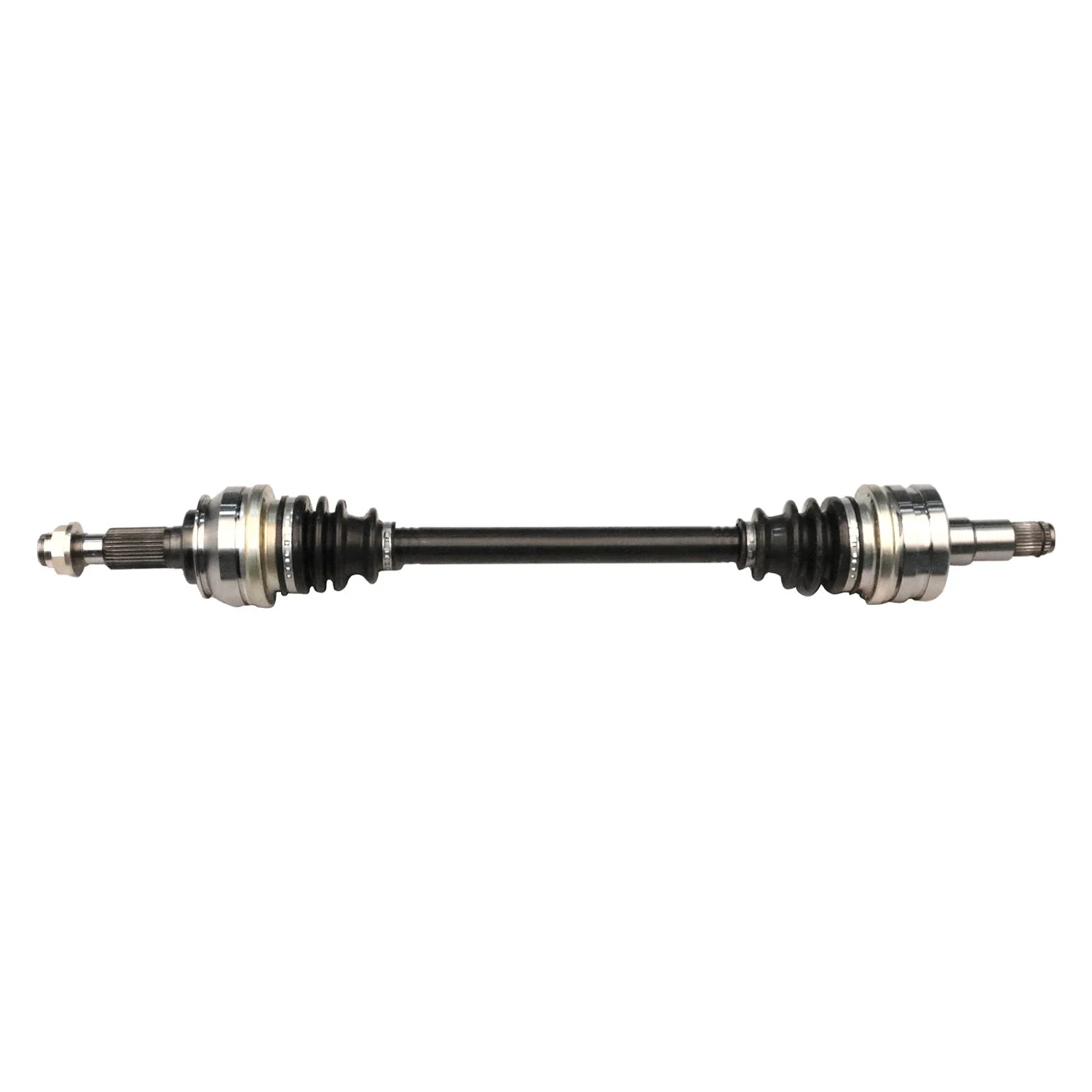
CV Joint, Drive Axle and Drivetrain Diagnosis
CV axles can click, pop, vibrate, leak grease, bind, or create clunks under load. Proper diagnosis matters before replacing parts.
Constant velocity joints, usually called CV joints, allow a drive axle to transfer power smoothly while the suspension moves up and down and the wheels turn left and right. Front-wheel-drive vehicles, many all-wheel-drive vehicles, and many modern independent suspension systems rely on CV axles.
A bad outer CV joint often makes a clicking or popping noise while turning, especially during acceleration. An inner CV joint may cause vibration, shudder, or clunking under load. A torn CV boot can sling grease around the inside of the wheel, control arm, strut, splash shield, or engine cradle.
Tennessee driving conditions can be hard on CV axles. Hills, curves, gravel roads, potholes, water, mud, rock driveways, suspension travel, and heavy loads all add stress to joints, boots, clamps, and axle shafts.
At Rock Bridge Automotive Repair, we inspect the complete area before recommending repairs. Axle noises and vibrations can overlap with wheel bearings, tires, engine mounts, suspension parts, transmission problems, and brake issues.

Common Symptoms
CV axle problems often change depending on steering angle, acceleration, vehicle speed, and load.
A worn outer CV joint commonly clicks or pops during turns, especially when accelerating from a stop or pulling out of a driveway.
A torn CV boot can sling grease onto the inside of the wheel, strut, control arm, splash shield, frame, or nearby suspension parts.
Inner CV joint wear, axle shaft problems, engine mounts, tires, or drivetrain issues can cause vibration when power is applied.
A worn axle joint, engine mount, transmission mount, driveline component, or suspension part can clunk when shifting from drive to reverse.
Once a CV boot tears, grease escapes and dirt, water, and grit can enter the joint. That can shorten the life of the axle quickly.
Axle joints are loaded harder during turns, climbs, acceleration, and suspension movement, so symptoms may be worse on hills and curves.
How CV Axles Work
A CV axle has to transfer engine torque while dealing with steering angle, suspension travel, road shock, and drivetrain movement.
Outer joints usually operate at larger steering angles and often make clicking or popping noises when worn.
Inner joints usually handle suspension movement and axle plunge. Wear may show up as vibration, shudder, or clunking under load.
Boots keep grease in and dirt out. A torn boot can turn a good joint into a failed joint if ignored too long.
Bent, damaged, or poor-quality axle shafts can cause vibration, fitment problems, seal leaks, and repeat complaints.
All-wheel-drive and four-wheel-drive systems may use additional front, rear, or intermediate axles that require proper inspection.
Axle replacement may involve transmission seals, differential seals, carrier bearings, hub splines, or related parts.
Local Driving Conditions
In the Gallatin and Bethpage area, many vehicles see more than smooth highway driving. Steep hills, sharp curves, rough pavement, gravel roads, long rock driveways, water crossings, mud, and potholes all increase suspension movement and axle angle changes.
Every time the wheels turn and the suspension moves, the CV joints and boots flex. A small boot crack can become a grease leak. A clicking joint may get worse under load. A vibration may only show up when accelerating uphill or around a curve.
That is why we take axle complaints seriously. A drive axle is not just a noise part; it is part of how power gets to the wheels.
Diagnosis Matters
CV axles can cause clicking and vibration, but they are not the only possibility. Wheel bearings, tires, engine mounts, transmission mounts, differential problems, brake issues, sway bar links, control arms, and ball joints can all create similar symptoms.
We inspect for torn boots, grease trails, loose joints, binding, axle shaft damage, hub spline condition, seal leaks, vibration under load, suspension movement, wheel bearing play, engine mount movement, and related front-end wear.
Replacing an axle that is not the problem wastes money. Finding the real source helps protect the customer and prevents repeat repairs.
Repair Quality
CV axles are one area where a cheap part can be a real headache. A low-quality axle may vibrate right out of the box, have poor boot material, weak clamps, incorrect length, poor machining, or fitment issues that create leaks or drivability problems.
The cheapest axle may not be the best value if it causes vibration, premature boot failure, ABS or tone ring problems on certain designs, seal leaks, or repeat replacement labor.
We prefer dependable parts that fit correctly and make sense for the vehicle, especially on AWD vehicles, trucks, SUVs, European vehicles, and vehicles driven on rough roads or long gravel driveways.
Related Repair Services
CV axle symptoms often overlap with suspension, steering, wheel bearing, tire, brake, and drivetrain complaints.
For clicks, clunks, pops, rattles, grinding, humming, and noises that happen while turning or driving over bumps.
Humming, roaring, grinding, wheel play, ABS lights, and hub problems can sometimes be confused with axle complaints.
Suspension movement, worn control arms, sway bars, ball joints, and struts can affect axle angles and front-end noises.
Loose steering and suspension joints can create clunks, pops, wandering, and front-end symptoms that overlap with axle noise.
Worn bushings can allow movement that causes clunks, tire wear, alignment shift, and drivetrain feel changes.
ABS lights, traction control warnings, AWD concerns, vibration complaints, and drivetrain codes may need diagnostic testing.
Schedule Axle Service
If your vehicle clicks while turning, vibrates under acceleration, slings grease near the wheel, or has a torn CV boot, call Rock Bridge Automotive Repair for a proper inspection.
Call (615) 946-2079 Contact Rock Bridge Automotive RepairQuestions and Answers
Common signs include clicking while turning, popping on acceleration, vibration under load, grease slung around the inside of the wheel, torn CV boots, clunking when shifting from drive to reverse, and axle noise while driving.
CV boots can fail from age, heat, road debris, suspension movement, rough roads, lifted suspension angles, oil contamination, and normal wear. Once the boot tears, grease escapes and dirt can enter the joint.
Yes. A worn or damaged CV axle can cause vibration, especially during acceleration or under load. Tires, wheel bearings, engine mounts, transmission mounts, and drivetrain problems can also cause similar symptoms.
A torn CV boot should be inspected quickly. If the joint loses grease or gets contaminated with dirt and water, the CV joint can wear rapidly and may eventually fail.
Cheap CV axles can be a bad value if they vibrate, fit poorly, have weak boots, leak at the seal, or fail early. Since drive axles transfer engine power to the wheels, quality and correct fit matter.
Yes. Axle noise, wheel bearing noise, tire noise, brake noise, and suspension noise can overlap. A road test and inspection help identify the real cause before parts are replaced.
Local CV Axle Repair
Rock Bridge Automotive Repair provides CV axle replacement, drive axle repair, torn CV boot inspection, drivetrain vibration diagnosis, and front-end repair for local drivers throughout the Gallatin, Tennessee area.
Rock Bridge Automotive Repair
From clicking CV joints to torn boots, axle vibration, and drivetrain clunks, we inspect the whole system and recommend repairs that make sense.
Brands We Service






© Copyright 2026, Rock Bridge Automotive Repair | Honoring America’s 250th Anniversary