Hard Starting
Hard starting can be caused by choke problems, fuel drain-back, flooding, weak accelerator pump shot, ignition trouble, or incorrect adjustment.
Call Us:
615-946-2079 

Carburetor rebuilding, cleaning, tuning, choke repair, float adjustment, accelerator pump diagnosis, classic vehicle fuel system repair, and old-school drivability diagnosis.
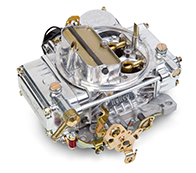 Carburetor repair is becoming a lost skill. Many shops no longer want to work on carburetors, and many younger technicians were trained almost entirely on fuel injection.
At Rock Bridge Automotive Repair, we still repair, rebuild, adjust, and diagnose carburetors for older vehicles, classic cars, trucks, hot rods, and specialty applications in Bethpage, Gallatin, Portland, Castalian Springs, and Sumner County.
Old-School Fuel System Skill
A carburetor is simple in concept but detailed in practice. It has to meter fuel, control air, respond to throttle changes, handle cold starts, idle smoothly, and transition cleanly under load.
A carburetor mixes fuel and air in a controlled manner so the engine can start, idle, accelerate, cruise, and operate under load. That sounds simple, but a good carburetor has several circuits working together: idle circuit, main metering, accelerator pump, power enrichment, choke system, float control, venting, vacuum passages, and throttle plates.
When one of those circuits is dirty, worn, misadjusted, leaking, clogged, warped, or mismatched to the engine, the vehicle can run poorly. It may be hard to start, flood, stall, hesitate, smell like fuel, idle rough, run rich, run lean, backfire, or fall on its face when the throttle opens.
We repair and rebuild many types of carburetors, including Holley, Rochester, Carter, Autolite, Motorcraft, Edelbrock, Stromberg, Solex, Zenith, Mikuni, Keihin, and other carburetors used on older cars, trucks, classics, and specialty equipment.
The best carburetor work starts with diagnosis. Sometimes the carburetor is the problem. Sometimes the real cause is ignition timing, vacuum leaks, weak fuel delivery, bad fuel, compression problems, linkage issues, or incorrect installation.
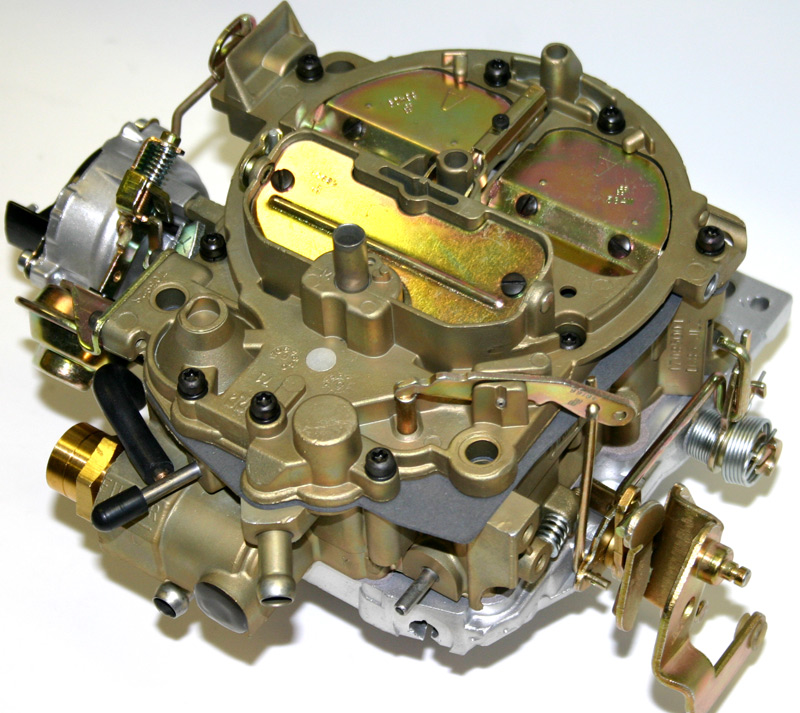
Carburetor Problems
Carburetor problems can show up as starting trouble, idle problems, hesitation, fuel smell, flooding, or poor performance.
Hard starting can be caused by choke problems, fuel drain-back, flooding, weak accelerator pump shot, ignition trouble, or incorrect adjustment.
Rough idle may come from dirty idle circuits, vacuum leaks, throttle shaft wear, incorrect mixture settings, ignition misfire, or engine mechanical issues.
A hesitation when opening the throttle may involve accelerator pump problems, lean transition circuits, vacuum leaks, timing, or wrong carburetor calibration.
Flooding can be caused by float level problems, needle and seat wear, excessive fuel pressure, debris in the seat, or a sinking float.
Fuel odor may come from leaks, flooding, bowl venting, fuel percolation, old hoses, incorrect pressure, or evaporative issues on later vehicles.
Poor response may involve pump shot, power valve, metering rods, jets, vacuum secondary operation, ignition timing, or engine condition.
Diagnosis First
Carburetors get blamed for many problems that are actually caused somewhere else.
An older vehicle with poor drivability needs the same kind of careful thinking as a modern vehicle. Before blaming the carburetor, we consider ignition timing, point dwell on older systems, spark quality, plug condition, vacuum leaks, intake gaskets, fuel pressure, fuel volume, compression, exhaust restriction, PCV operation, and throttle linkage.
A carburetor cannot fix a weak ignition system. It cannot overcome a vacuum leak. It cannot make up for incorrect timing. It cannot perform correctly if fuel pressure is too high, too low, dirty, or inconsistent.
That is why we diagnose the whole system. When the carburetor is the problem, we repair it. When something else is causing the carburetor to look bad, we find that too.
Rebuild and Repair
A carburetor rebuild is more than installing gaskets. Cleaning, inspection, adjustment, and understanding the circuits matter.
We disassemble and clean passages, jets, idle circuits, bowls, vents, and fuel metering areas so fuel and air can move correctly.
Old gaskets, accelerator pump diaphragms, needle and seat assemblies, and seals are replaced as needed during rebuilding.
Float level and float condition are critical. A sinking float or incorrect level can cause flooding, lean operation, or fuel starvation.
Manual, hot-air, electric, and divorced choke systems all need correct setup for good cold starting and warm-up.
The accelerator pump must deliver the right shot of fuel when the throttle opens or the engine may stumble or bog.
Idle speed, mixture, choke pull-off, fast idle, float level, linkage, and secondary operation may all require careful adjustment.
Carburetor Knowledge
Carburetors all mix fuel and air, but they do not all do it the same way.
A one-barrel carburetor on an old work truck, a Rochester Quadrajet on a GM V8, a Holley four-barrel on a performance engine, a Carter or Edelbrock square-bore carburetor, a Stromberg on an older vehicle, or a small-engine carburetor all have different details.
Some use metering rods, some use jets, some use power valves, some use vacuum secondaries, some use mechanical secondaries, and some use multiple circuits that overlap during transition. That is why carburetor experience matters.
The goal is always the same: correct air/fuel mixture for starting, idle, acceleration, cruise, and load. The method changes depending on the carburetor and the engine it is feeding.
Classic and Older Vehicles
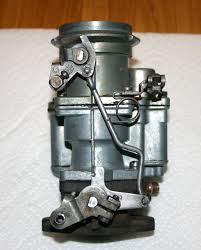
Carburetors are common on classic cars, older trucks, hot rods, farm-use vehicles, specialty vehicles, and older performance builds.
Classic vehicles need someone who understands carburetors, ignition timing, vacuum advance, fuel delivery, and old-school drivability.
Older work trucks often need practical carburetor repair, choke adjustment, linkage repair, and fuel system diagnosis.
Performance carburetors require attention to fuel pressure, jetting, accelerator pump shot, secondary operation, and engine combination.
Old fuel can varnish passages, stick needles, clog jets, damage accelerator pumps, and create hard starting or flooding.
Engine swaps, intake changes, camshaft changes, and exhaust changes can affect carburetor calibration and drivability.
We understand that older vehicles need ignition, fuel, vacuum, compression, and carburetor checks together.
Fuel Quality Problems
Older carbureted vehicles often sit longer, and modern fuel does not always age kindly.
Many carburetor problems start with fuel condition. Vehicles that sit can develop varnish, gum, stuck needles, clogged idle passages, deteriorated rubber parts, and fuel residue inside the bowl. Ethanol-blended fuel can also be harder on older fuel system materials that were not designed for it.
Before rebuilding a carburetor, we also consider the fuel tank, fuel lines, fuel filter, fuel pump, fuel pressure, and whether contamination is being carried back into the rebuilt carburetor.
A clean carburetor will not stay clean if rust, varnish, debris, or deteriorated hose material is still entering the fuel system.
Related Services
Carburetor work often connects to ignition, fuel delivery, electrical diagnosis, and older vehicle repair.
Ignition timing, spark quality, advance operation, and distributor condition affect carburetor performance.
Choke circuits, ignition systems, charging systems, and wiring problems can all affect older vehicle drivability.
We diagnose drivability problems instead of guessing whether the carburetor is the cause.
Our main service page for general repair, diagnostics, maintenance, fuel systems, brakes, electrical work, and more.
Frequently Asked Questions
Yes. We still repair, rebuild, clean, adjust, and tune carburetors for older vehicles, classic cars, trucks, and specialty applications.
Hard starting, rough idle, hesitation, flooding, fuel smell, stalling, black smoke, poor fuel economy, and poor throttle response can all point toward carburetor problems.
Yes. Vacuum leaks, ignition timing, weak spark, fuel pressure, compression problems, and bad fuel can all mimic carburetor failure.
Yes. We work on Holley, Rochester, Carter, Edelbrock, Autolite, Motorcraft, Stromberg, Solex, Zenith, Mikuni, Keihin, and many others.
Yes. Old fuel can create varnish, gum, clogged passages, stuck needles, and accelerator pump problems.
Yes. Modified engines may need careful attention to fuel pressure, jetting, accelerator pump operation, secondary operation, timing, and vacuum signal.
Community Discount
We proudly offer a 10% discount to active-duty military members, veterans, and nurses as a thank-you for your service and sacrifice.
Learn About Our DiscountLocal Carburetor Repair
Rock Bridge Automotive Repair provides carburetor repair and rebuilding for local drivers who need a shop that still understands older fuel systems, classic vehicles, and old-school drivability diagnosis.
Memorial Day Tribute
This Memorial Day, we remember the brave men and women who gave their lives in service to the United States. As America approaches its 250th birthday, we are grateful for their sacrifice and proud to serve our Tennessee community.
Brands We Service


















© Copyright 2026, Rock Bridge Automotive Repair | Honoring America’s 250th Anniversary