No-Start Problems
A failed distributor, pickup coil, module, cap, rotor, ignition coil circuit, or point system can leave an older vehicle cranking without spark.
Distributor diagnosis, cap and rotor replacement, breaker point service, ignition timing checks, pickup coil testing, ignition module diagnosis, vacuum advance inspection, and classic vehicle ignition repair.
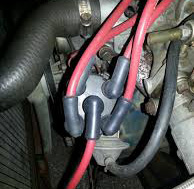
The ignition distributor is one of the major players in making older gasoline engines run correctly. It sends spark to the correct cylinder at the correct time, and on many older engines it also helps control spark advance.
At Rock Bridge Automotive Repair, we still repair and diagnose distributor-based ignition systems. That matters when an older car or truck needs more than a scan tool and a parts guess.
Old-School Ignition Knowledge
A distributor does more than hold spark plug wires. It is responsible for spark routing, ignition timing, starting quality, idle quality, throttle response, and overall drivability on many older vehicles.
An ignition distributor routes high-voltage current from the ignition coil to each spark plug in the correct firing order. If that spark is weak, late, early, intermittent, or sent to the wrong cylinder, the engine will not run properly.
On many older vehicles, the distributor also helps control ignition timing. That means it does not just distribute spark — it helps decide when the spark happens. That timing decision affects starting, power, fuel economy, engine temperature, emissions, and engine life.
Early engines used several ignition designs, including magneto systems and simple battery-and-coil arrangements. As multi-cylinder engines became common, the distributor became the practical way to fire several spark plugs from one ignition coil.
For decades, distributors were standard equipment on gasoline engines. Classic cars, muscle cars, older trucks, carbureted engines, and many early fuel-injected vehicles used distributor-based ignition systems.
Those systems evolved over time. Early point-style distributors used breaker points and condensers. Later systems used electronic pickups and ignition modules. Eventually, many newer engines moved to distributorless ignition and coil-on-plug systems.
Breaker point ignition systems were clever and dependable for their time, but they needed maintenance. Points opened and closed mechanically. Every time the engine ran, the rubbing block wore, the point gap changed, and ignition timing could drift.
When points burned, pitted, wore, or went out of adjustment, the engine could become hard to start, run rough, misfire, lose power, or burn more fuel. Condensers could fail too, causing weak spark, burned points, misfires, and no-start problems.
Fuel does not explode instantly in a cylinder. It burns across the combustion chamber over a short amount of time. Because that burn takes time, the spark plug has to fire before the piston reaches top dead center so peak cylinder pressure occurs at the right moment after the piston starts down on the power stroke.
As engine speed increases, the piston moves faster, but the fuel still needs time to burn. That is why ignition timing must advance as RPM increases. If the spark happens too late, the engine loses power, runs hotter, wastes fuel, and may feel lazy. If the spark happens too early, the engine can ping, knock, crank hard, overheat, or damage parts.
Fuel quality also matters. Higher-octane fuel resists detonation better and can allow more timing under the right conditions, while lower-octane fuel may require less advance to prevent spark knock. The goal is not simply “more timing.” The goal is the right timing for the engine load, RPM, temperature, fuel, compression, and operating conditions.
Mechanical and vacuum-advance distributors were clever for their time, but they could only approximate what the engine needed. Centrifugal advance responded mostly to engine speed. Vacuum advance responded mostly to engine load. Together, they gave older engines a workable timing curve, but they could not measure everything happening inside the engine.
Springs weakened, weights stuck, vacuum diaphragms leaked, breaker points wore, bushings loosened, and timing drifted. Even when everything worked correctly, the system was still mechanical. It could not instantly adjust for coolant temperature, intake air temperature, knock, altitude, fuel quality, throttle movement, emissions strategy, or every changing driving condition.
That limitation is one reason manufacturers moved toward electronically controlled ignition timing. Electronic systems could use sensors and control modules to adjust spark timing more accurately than a purely mechanical distributor ever could.
Once computers could control spark timing, the distributor became less necessary. Early electronic ignition systems still used distributors to route spark, but the computer increasingly handled timing decisions. Later, distributorless ignition systems removed the distributor and used coil packs. Eventually, coil-on-plug systems put an individual coil at each spark plug.
This was a major step forward for reliability, emissions, fuel economy, starting, drivability, and engine life. Without breaker points, worn advance weights, cracked caps, carbon-tracked rotors, and loose distributor bushings, ignition systems became more accurate and required less regular adjustment.
Mechanical and vacuum-advance distributors did their best to control spark advance with springs, weights, vacuum diaphragms, linkage, and engine vacuum signals. These systems were impressive mechanical solutions, but they could wear, stick, leak, or become misadjusted.
Mechanical advance used weights and springs to change timing as engine speed increased. Vacuum advance changed timing based on engine load. When those systems worked properly, the vehicle started better, accelerated better, and ran more efficiently.
When those systems failed, the engine might ping, hesitate, overheat, lack power, idle poorly, or feel lazy under acceleration. A distributor can have spark and still be wrong if the timing and advance systems are not working correctly.
The move from breaker points to electronic ignition was one of the biggest improvements in everyday engine reliability. Electronic ignition removed the constant wear and adjustment problems of mechanical contact points. Spark became more consistent, maintenance needs dropped, and engines became easier to start and keep in tune.
Systems such as GM’s High Energy Ignition helped bring stronger spark, longer service intervals, and better ignition performance to everyday vehicles. Electronic ignition did not eliminate every ignition problem, but it helped engines run cleaner, smoother, and more reliably than the old point systems many of us grew up servicing.
From a repair-shop point of view, it is hard to overstate how important that change was. Better spark control and reduced ignition wear were major reasons modern engines became more dependable and long-lived.
Electronic distributor systems reduced maintenance, but they still have failure points. Pickup coils, ignition modules, reluctors, wiring connectors, grounds, distributor shafts, and internal wiring can all create problems.
Some failures are intermittent. A vehicle may start cold, stall hot, restart later, or misfire only under load. That kind of problem requires testing, not guessing.
The distributor cap and rotor handle high voltage every time the engine runs. Over time, they can wear, burn, crack, corrode, or develop carbon tracking. Moisture inside the cap can also cause spark to jump where it should not.
A bad cap or rotor can cause misfires, hard starting, rough running, stalling, or a no-start. Replacing the cap and rotor may be part of proper ignition maintenance, but diagnosis still matters. A cap and rotor will not fix a bad pickup coil, weak ignition coil, poor wiring, or incorrect timing.
Ignition timing determines when the spark plug fires in relation to piston position. If timing is too far advanced, the engine may ping, knock, crank hard, or overheat. If timing is too retarded, the engine may feel weak, run hot, waste fuel, or respond poorly.
On distributor-equipped vehicles, timing problems can be caused by incorrect distributor position, worn distributor parts, failed advance mechanisms, loose hold-downs, timing chain wear, poor vacuum signals, or incorrect previous repairs.
A bad distributor can mimic carburetor trouble, fuel injection problems, vacuum leaks, sensor failures, or mechanical engine problems. A vehicle may crank normally but not start. It may run fine cold and fail hot. It may idle acceptably but misfire under load.
That is why old-school diagnosis still matters. Before replacing major parts, the ignition system needs to be tested correctly.
At Rock Bridge Automotive Repair, we inspect distributor-based ignition systems as a complete system. Depending on the vehicle, we may check spark output, cap and rotor condition, plug wires, ignition coil performance, module operation, pickup signal, distributor shaft play, timing, advance operation, wiring condition, grounds, and related engine symptoms.
We do not want to guess. We want to find the reason the vehicle will not start, will not idle, misfires, backfires, lacks power, or will not hold timing.
Many older vehicles are still on the road because someone cares about them. Classic cars, older work trucks, farm trucks, muscle cars, carbureted engines, and early electronic ignition vehicles need a technician who understands how ignition systems worked before everything became coil-on-plug.
We commonly repair ignition distributors because these systems are still important to the vehicles that use them.

Distributor Problems We Track Down
A failed distributor, pickup coil, module, cap, rotor, ignition coil circuit, or point system can leave an older vehicle cranking without spark.
Carbon tracking, worn rotors, bad plug wires, incorrect timing, weak spark, or worn distributor parts can make an older engine run poorly.
Mechanical and vacuum advance problems can cause hesitation, pinging, overheating, poor power, unstable timing, or lazy throttle response.
Distributor ignition systems require testing and experience, not just code reading or parts guessing.
Why Choose Rock Bridge Automotive Repair?
Many shops are comfortable with modern scan-tool diagnosis but less comfortable with older ignition systems. Distributor-based ignition requires mechanical understanding, timing knowledge, electrical testing, and experience with how older engines behave.
We work on older vehicles often enough to know that a distributor problem may not announce itself clearly. It may show up as a no-start, a misfire, a hot stall, a backfire, poor throttle response, or timing that keeps moving.
Older Vehicle Ignition Problems?
If your older car or truck has a no-start, misfire, backfire, rough idle, timing problem, or weak spark, we can help diagnose the distributor and ignition system properly.
Call (615) 946-2079Ignition Distributor Questions and Answers
An ignition distributor routes high-voltage spark from the ignition coil to the correct spark plug in the correct firing order. On many older vehicles, it also helps control ignition timing.
Common signs include hard starting, no-start, misfires, rough idle, poor acceleration, stalling, backfiring, poor fuel economy, unstable timing, or spark loss.
Yes. If the distributor, pickup coil, ignition module, cap, rotor, wiring, or ignition coil circuit fails, spark may not reach the spark plugs and the engine may crank without starting.
Common failure points include the distributor cap, rotor, breaker points, condenser, pickup coil, ignition module, shaft bushings, vacuum advance, mechanical advance, wiring, and internal corrosion.
Electronic ignition removed breaker point wear, improved spark consistency, reduced maintenance, helped engines start and run better, and became one of the major improvements in everyday engine reliability.
Yes. Older cars and trucks with distributor-based ignition systems still need proper diagnosis of the cap, rotor, timing, advance mechanism, module, pickup coil, points, condenser, wiring, and related ignition parts.
Local Distributor Repair
We provide ignition distributor repair, ignition timing diagnosis, no-start testing, misfire diagnosis, classic car ignition repair, and older vehicle electrical troubleshooting for drivers in Bethpage, Gallatin, Portland, Castalian Springs, Westmoreland, and throughout Sumner County, Tennessee.
Brands We Service











© Copyright 2026, Rock Bridge Automotive Repair | Honoring America’s 250th Anniversary