Engine Oil Quality
The turbocharger bearings depend on a constant supply of clean, high-quality engine oil. Sludge, contaminated oil, incorrect oil viscosity, or extended oil change intervals can reduce lubrication and shorten turbocharger life.
Call Us:
615-946-2079 

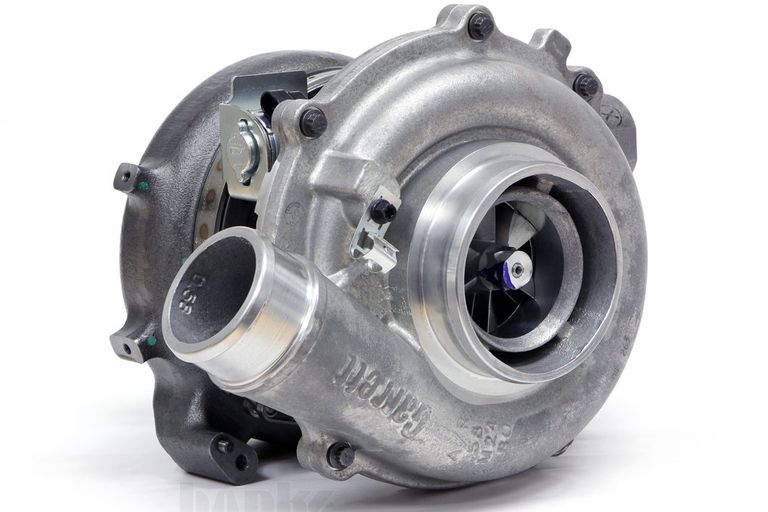 Audi Turbocharger Diagnosis and Repair in Gallatin, TN
Professional Audi turbocharger diagnosis for low power, boost concerns, oil consumption, check engine lights, whistle noises, smoke, and drivability problems.
Turbochargers have fascinated automotive enthusiasts for decades. Long before factory turbocharged Audi engines became common, we were installing complete aftermarket turbocharger systems on performance vehicles. Those projects taught us an important lesson that still applies today:
A turbocharger is only as reliable as the systems supporting it.
Audi Turbocharger Diagnosis
Modern Audi turbocharged engines are remarkable examples of automotive engineering. They produce impressive power from relatively small engines while maintaining excellent drivability and fuel economy. When something goes wrong, however, replacing the turbocharger without proper diagnosis can become an expensive mistake.
Many people think of the turbocharger as a single component bolted to the exhaust manifold. In reality, it is part of an entire engineered system.
The turbocharger depends on clean engine oil, proper oil pressure, unrestricted oil return, adequate cooling, accurate sensor information, correct fuel delivery, proper crankcase ventilation, and precise engine management.
When any one of those supporting systems develops a problem, the turbocharger may simply become the first component to show the symptoms.
The turbocharger isn't always the failed component. Sometimes it's the first component telling us another system has a problem.
There was a time when the easiest way to increase horsepower was simply to build a larger engine. Bigger engines produced more torque, but they were also heavier, consumed more fuel, and produced more emissions.
Turbocharging changed that philosophy.
Instead of increasing engine displacement, engineers learned how to recover energy that would otherwise be wasted. Every time an engine runs, hot exhaust gases leave the cylinders carrying tremendous amounts of energy. A turbocharger captures part of that energy and uses it to spin a turbine that compresses the incoming intake air.
Compressed air contains more oxygen than the same volume of atmospheric air. More oxygen allows the engine management system to inject more fuel while maintaining the proper air/fuel ratio, producing significantly more power from a smaller engine.
The result is an engine that can deliver excellent fuel economy during normal driving while producing impressive power whenever the driver asks for it.
Years ago, while installing aftermarket turbocharger systems, we learned that adding boost pressure was actually one of the easier parts of the project.
Keeping the engine alive was the difficult part.
As boost pressure increases, intake air temperature also increases. Hot intake air is less dense, increases the likelihood of detonation, and reduces engine performance. That is why intercoolers are such an important part of a turbocharged engine.
Engine oil also works much harder in a turbocharged engine. Not only does it lubricate the engine, but it also lubricates and helps cool the turbocharger bearings. Higher temperatures place greater demands on the oil, which is one reason proper oil quality and regular maintenance are so important.
On many performance builds, we installed larger intercoolers, auxiliary oil coolers, upgraded fuel systems, and carefully monitored the air/fuel ratio under boost. A lean fuel mixture under heavy boost can create combustion temperatures high enough to damage pistons, valves, and other engine components in a surprisingly short period of time.
Fortunately, today's Audi engineers have already done that engineering for us. Modern Audi turbocharged engines leave the factory with carefully matched turbochargers, intercoolers, sophisticated engine management systems, electronic boost control, and extensive sensor monitoring designed to deliver excellent performance while protecting the engine.
Modern Audi turbochargers are not simply performance components—they are carefully engineered systems designed to balance power, fuel economy, emissions, reliability, and engine durability.
One of the biggest misconceptions about turbocharger failures is that the turbocharger itself is usually the original problem.
Sometimes the turbocharger does wear out after hundreds of thousands of miles of service. More often, however, something else causes the turbocharger to fail prematurely.
Because an Audi turbocharger operates at incredibly high speeds and temperatures, it depends on several supporting systems working exactly as designed. When one of those systems develops a problem, the turbocharger may simply become the first expensive component to suffer the consequences.
 August Horch's First Car (Courtesy of Audi.com)
Audi History
Aircraft engineers in the 1930's overcame a lot of obstacles and successfully used turbochargers to make aircraft engines more powerful without adding a lot of weight and complexity to the engines.
Unfortunately, when those same attempts were tried on passenger vehicles, they tended to be less reliable without the extra cooling that aircraft provided. The one area where turbochargers excelled was in diesel truck applications. The steady engine speeds, combined with narrower engine speed variations work well in turbocharger applications. The first production vehicles to use turbocharger were the Chevrolet Corvaire in 1962 and the Oldsmobile Jetfire in the same year. Though both of those uses quickly gathered attention, though the attention was mostly because of the terrible turbocharger lag and the very random throttle resonse that basically made both of those vehicles both scary and dangerous to drive.
The turbocharger bearings depend on a constant supply of clean, high-quality engine oil. Sludge, contaminated oil, incorrect oil viscosity, or extended oil change intervals can reduce lubrication and shorten turbocharger life.
The turbocharger not only needs adequate oil pressure, but it must also be able to return that oil to the engine. Restrictions in the oil supply or return system can quickly damage turbocharger bearings and seals.
Modern Audi turbochargers operate in an extremely hot environment. Engine cooling system problems, overheating, or inadequate coolant circulation can affect both engine and turbocharger durability.
The PCV system controls crankcase pressure throughout the engine. Abnormal crankcase pressure can affect oil control, contribute to oil leaks, and in some situations influence turbocharger oil drainage.
A damaged air filter, intake leak, or foreign object entering the intake system can damage the compressor wheel. Even small particles entering the turbocharger at high speed can cause significant damage over time.
Turbocharged engines depend on accurate sensor information and precise fuel control. Lean fuel mixtures, incorrect boost control, ignition problems, or engine management faults can place tremendous stress on both the engine and the turbocharger.
Years ago, when we built aftermarket turbocharged engines, one lesson became very clear.
The goal wasn't simply to make more horsepower.
The goal was to build a system that would survive making more horsepower.
That meant carefully controlling intake air temperature with intercoolers, keeping engine oil temperatures under control, providing adequate fuel delivery, and constantly monitoring the air/fuel mixture to protect the engine under boost.
Today's factory-engineered Audi turbocharged engines already include decades of engineering improvements, but the same principles still apply.
When a turbocharger fails, we don't simply ask,"Is the turbocharger bad?"
We also ask,"Why did it fail?"
Replacing a failed turbocharger without understanding why it failed is much like replacing a blown fuse without finding the short circuit. The new part may fail for exactly the same reason as the original.
A modern Audi has dozens of sensors continuously monitoring engine performance. When the turbocharger system, engine management system, or one of the supporting systems begins operating outside its expected range, the engine computer often detects the problem long before complete failure occurs.
One important thing we've learned over the years is that a symptom doesn't necessarily identify the failed part.
Instead, the symptom tells us where to begin our diagnosis.
The following symptoms commonly lead us to inspect the turbocharger system, but each one may have several possible causes.
Poor acceleration or reduced engine performance may be caused by a failing turbocharger, but it can also result from boost leaks, intake restrictions, sensor faults, fuel delivery problems, ignition concerns, restricted exhaust components, or engine management issues.
Boost control codes, airflow faults, fuel trim codes, oxygen sensor codes, and other diagnostic trouble codes may indicate that the turbocharger system deserves inspection. They do not automatically mean the turbocharger itself has failed.
Unusual noises under acceleration may originate from the turbocharger, charge-air plumbing, intercooler connections, intake ducts, or boost hoses. Careful inspection helps identify the actual source of the noise.
Oil entering the exhaust system may indicate worn turbocharger seals, but oil consumption can also result from PCV system concerns, valve seals, piston rings, or other engine conditions.
Turbocharger concerns are only one possible cause of oil consumption. Before recommending turbocharger replacement, we evaluate the entire engine, including the crankcase ventilation system, external oil leaks, and other common sources of oil loss.
Audi's engine management system may reduce engine power to protect the engine when abnormal boost pressure, sensor readings, or other operating conditions are detected. Determining why the vehicle entered limp mode is far more important than simply clearing the fault codes.
A customer may arrive saying,
"My Audi has no power. I think the turbocharger is bad."
Maybe.
But that same complaint could also be caused by:
Each of those failures can produce similar symptoms.
That is exactly why professional diagnosis is so important before replacing expensive components.
A symptom tells us where to begin. It never tells us where to stop.
Diagnosing a turbocharged Audi is much more involved than determining whether the turbocharger can build boost.
Modern Audi engines constantly monitor airflow, boost pressure, fuel delivery, ignition timing, exhaust emissions, engine temperature, oil pressure, and dozens of other operating parameters. Understanding how those systems work together is the key to an accurate diagnosis.
Our goal is not to replace the most expensive component. Our goal is to identify the component—or system—that actually caused the customer's concern.
Before opening the hood, we begin by collecting as much information as possible.
Diagnostic trouble codes are only one piece of the puzzle. We also review freeze-frame information, live scan data, operating conditions when the fault occurred, and the customer's description of the concern.
Many turbocharger complaints occur only under heavy acceleration, climbing hills, towing, or after the engine reaches normal operating temperature. Understanding when the problem occurs often helps narrow the diagnostic path.
Depending on the symptoms, diagnosis may include:
Over the years we've learned that many turbocharger complaints turn out to be something entirely different.
A split intercooler hose, leaking charge pipe, sticking wastegate, failing boost control solenoid, restricted air filter, crankcase ventilation problem, or fuel delivery concern may produce symptoms that feel exactly like a failed turbocharger.
Replacing the turbocharger without identifying those problems may leave the customer with exactly the same complaint after an expensive repair.
We don't replace turbochargers because a scan tool points toward boost pressure. We replace turbochargers after we've demonstrated that the turbocharger is actually the source of the problem.
Around our shop, we have another saying:
NEW means Never Ever Worked Yet.
Most new parts are excellent. Occasionally, one isn't. More importantly, installing a new part doesn't automatically mean the original problem has been solved.
After repairs are completed, we verify boost pressure, review live scan data, confirm that warning lights remain off, and road test the vehicle to ensure the customer's original concern has been corrected.
We don't believe in hoping a repair worked.
We believe in proving it.
People are sometimes surprised to learn that the turbocharger itself is often one of the most durable components on a modern Audi engine.
A properly maintained turbocharger may rotate at well over 150,000 RPM while being exposed to exhaust temperatures that would quickly destroy many other mechanical components.
That kind of durability doesn't happen by accident.
Audi engineers have spent decades developing systems that allow turbochargers to survive under some of the harshest operating conditions found anywhere on the vehicle.
Pressurized engine oil forms a protective film between the turbocharger shaft and its bearings. Clean oil of the correct viscosity is absolutely critical to turbocharger life.
Many modern Audi turbochargers are both oil-cooled and water-cooled. Proper coolant circulation helps remove heat after demanding driving conditions and reduces thermal stress on the turbocharger assembly.
The engine control module constantly adjusts boost pressure based on engine load, throttle position, intake temperature, and many other operating conditions. The goal is maximum performance without sacrificing reliability.
Compressing air creates heat. Intercoolers reduce intake air temperature, allowing denser air to enter the engine while reducing the likelihood of detonation under boost.
Modern Audi engines constantly monitor engine operating conditions and adjust fuel delivery to protect the engine during changing boost levels and driving conditions.
If abnormal operating conditions are detected, the engine management system may reduce boost pressure or place the vehicle into a reduced-power mode to help protect the engine and turbocharger from further damage.
One lesson has remained remarkably consistent throughout my career.
Whether we were installing aftermarket turbocharger systems years ago or diagnosing today's factory-engineered Audi turbocharged engines, success has never depended on the turbocharger alone.
It has always depended on the systems supporting it.
A clean lubrication system. A healthy cooling system. Accurate sensor information. Proper fuel delivery. Correct crankcase ventilation. Reliable ignition. Proper engine management.
When those systems work together, a turbocharger can provide years of reliable service.
When one of those systems begins to fail, the turbocharger often becomes the first expensive component to reveal that something is wrong.
A turbocharger doesn't survive because it's exceptionally strong. It survives because every supporting system is doing its job.
Years ago, before turbocharged engines became common in everyday passenger vehicles, we spent countless hours installing aftermarket turbocharger systems on performance cars.
Adding horsepower wasn't the difficult part.
Keeping the engine alive was.
Every turbocharger installation became a lesson in systems engineering. We weren't simply adding a turbocharger. We were designing a complete package that included properly sized intercoolers, carefully engineered intake plumbing, upgraded fuel delivery, auxiliary oil coolers when necessary, and careful calibration of the engine's air/fuel mixture.
One lean fuel mixture under boost could destroy pistons, valves, bearings, or cylinder heads in a matter of seconds. We learned very quickly that horsepower means very little if the engine doesn't survive long enough to enjoy it.
Today's Audi engineers have already solved many of those challenges. Modern Audi turbocharged engines use sophisticated engine management systems capable of adjusting boost pressure, ignition timing, fuel delivery, electronic throttle control, and dozens of other operating parameters hundreds of times every second.
That engineering is remarkable.
But it also means that diagnosing a turbocharged Audi requires understanding how all of those systems work together.
A turbocharger complaint may actually be caused by a cooling system problem.
It may be caused by a crankcase ventilation problem.
It may be caused by an intake leak.
It may be caused by an electrical fault.
Or it may actually be the turbocharger itself.
Our responsibility is determining which one it is before recommending repairs.
Horsepower gets people's attention. Reliability earns their trust.
Whether we're diagnosing an Audi turbocharger, a cooling system concern, a PCV problem, an electrical fault, or a check engine light, our philosophy remains the same.
We begin by understanding the entire system.
We gather information.
We test.
We verify our findings.
Only then do we recommend repairs.
That approach has served our customers well for decades, and it's one of the reasons we enjoy working on sophisticated vehicles like Audi.
We don't replace turbochargers because they're expensive. We replace them because we've proven they need to be replaced.
One of the most expensive mistakes that can be made on a turbocharged engine is replacing the turbocharger before proving that it has actually failed.
Modern Audi engines are incredibly sophisticated. The engine control module monitors dozens of sensors while continuously adjusting boost pressure, ignition timing, fuel delivery, throttle position, and other operating parameters. Because so many systems work together, similar symptoms can often have very different causes.
Our job is to separate the symptom from the cause.
When diagnosing an Audi turbocharger concern, we begin asking questions like these:
Each answer helps narrow the diagnostic path until the actual cause of the concern has been identified.
Once repairs are completed, our work isn't finished.
We verify boost pressure, review live scan data, monitor engine operation under load, and confirm that the original concern has been corrected.
Simply installing a new turbocharger doesn't guarantee the repair was successful.
The vehicle has to prove it.
Our goal isn't to install a turbocharger. Our goal is to return an Audi that performs exactly the way its engineers intended.
Turbocharged engines have been part of our automotive experience for decades.
From building complete aftermarket turbocharger systems years ago to diagnosing today's sophisticated factory-engineered Audi engines, one principle has never changed.
Every successful repair begins with understanding how the entire system works together.
That is why we diagnose before we replace.
That is why we verify every repair.
And that is why we enjoy working on Audi vehicles.
We don't work on Audis. We FIX Audis. It's basically the same thing... Only with better results.
Frequently Asked Questions
Not necessarily. A check engine light tells us that one or more systems have detected a problem. Boost control faults, airflow problems, fuel trim concerns, ignition problems, vacuum leaks, PCV system faults, and sensor failures may all produce symptoms that feel like a turbocharger problem. Proper diagnosis helps determine the actual cause before expensive parts are replaced.
Absolutely. A leaking intercooler, split charge pipe, loose hose connection, or boost leak can dramatically reduce engine performance while the turbocharger itself continues operating normally. That's one reason we inspect the complete charge-air system during diagnosis.
Yes. The Positive Crankcase Ventilation (PCV) system helps regulate crankcase pressure and oil vapor. Abnormal crankcase pressure can contribute to oil control problems, oil leaks, and conditions that may affect turbocharger operation. Because these systems work together, we evaluate them together.
Yes. Turbocharger bearings depend on a constant supply of clean engine oil. Dirty oil, sludge, incorrect oil viscosity, or extended oil change intervals can shorten turbocharger life. Proper maintenance is one of the best investments you can make in any turbocharged engine.
No. Blue exhaust smoke may indicate turbocharger seal concerns, but it can also result from PCV system problems, valve seals, piston rings, or other engine conditions. Diagnosis helps determine why oil is entering the combustion or exhaust system before repairs are recommended.
No. At Rock Bridge Automotive Repair, we believe that symptoms are clues—not conclusions. We test the turbocharger and the systems supporting it before recommending replacement. Our goal is to identify the actual cause of the concern, not simply replace the most expensive part.
Absolutely. We provide Audi turbocharger diagnosis and repair for customers from Bethpage, Gallatin, Portland, Castalian Springs, Sumner County, and surrounding Middle Tennessee communities. Whether your Audi has low power, a check engine light, boost concerns, oil consumption, smoke, unusual noises, or drivability problems, we'll diagnose the complete system before recommending repairs.
Frequently Asked Questions
Not necessarily. A check engine light tells us that one or more systems have detected a problem. Boost control faults, airflow problems, fuel trim concerns, ignition problems, vacuum leaks, PCV system faults, and sensor failures may all produce symptoms that feel like a turbocharger problem. Proper diagnosis helps determine the actual cause before expensive parts are replaced.
Absolutely. A leaking intercooler, split charge pipe, loose hose connection, or boost leak can dramatically reduce engine performance while the turbocharger itself continues operating normally. That's one reason we inspect the complete charge-air system during diagnosis.
Yes. The Positive Crankcase Ventilation (PCV) system helps regulate crankcase pressure and oil vapor. Abnormal crankcase pressure can contribute to oil control problems, oil leaks, and conditions that may affect turbocharger operation. Because these systems work together, we evaluate them together.
Yes. Turbocharger bearings depend on a constant supply of clean engine oil. Dirty oil, sludge, incorrect oil viscosity, or extended oil change intervals can shorten turbocharger life. Proper maintenance is one of the best investments you can make in any turbocharged engine.
No. Blue exhaust smoke may indicate turbocharger seal concerns, but it can also result from PCV system problems, valve seals, piston rings, or other engine conditions. Diagnosis helps determine why oil is entering the combustion or exhaust system before repairs are recommended.
No. At Rock Bridge Automotive Repair, we believe that symptoms are clues—not conclusions. We test the turbocharger and the systems supporting it before recommending replacement. Our goal is to identify the actual cause of the concern, not simply replace the most expensive part.
Absolutely. We provide Audi turbocharger diagnosis and repair for customers from Bethpage, Gallatin, Portland, Castalian Springs, Sumner County, and surrounding Middle Tennessee communities. Whether your Audi has low power, a check engine light, boost concerns, oil consumption, smoke, unusual noises, or drivability problems, we'll diagnose the complete system before recommending repairs.
A turbocharger is one of the most impressive pieces of engineering found on a modern Audi engine, but it cannot operate successfully by itself.
It depends on proper lubrication, effective cooling, accurate engine management, reliable fuel delivery, healthy crankcase ventilation, unrestricted airflow, and dozens of supporting components working together as a complete system.
That is why we don't begin by asking, "Should we replace the turbocharger?"
We begin by asking, "Why is the system no longer performing the way Audi's engineers intended?"
Finding the answer to that question is what guides every repair we perform.
We don't diagnose parts. We diagnose systems. When we understand the system, the correct repair usually becomes obvious.
Our appreciation for turbocharged engines didn't begin when manufacturers started installing them at the factory.
Years ago, we were building complete aftermarket turbocharger systems that required careful attention to intercooling, lubrication, fuel delivery, ignition timing, and engine management. Those projects reinforced a lesson that still guides our diagnostic process today.
Reliable turbocharged engines are built on complete systems—not individual parts.
That same philosophy applies to every factory turbocharged Audi that enters our shop. Rather than focusing on the turbocharger alone, we evaluate the entire system that supports it, helping us identify the actual cause of the customer's concern before recommending repairs.
One of the best examples of this philosophy is our shop foreman's custom-built turbocharged Nissan 240SX. Although it was designed for high performance rather than everyday transportation, it perfectly demonstrates how turbochargers depend on proper lubrication, cooling, fuel delivery, intake air temperature control, and careful engineering to produce both performance and reliability.
If you're interested in learning more about turbocharger engineering and seeing one of our favorite high-performance projects, take a look at our feature article:
Building Reliable Turbocharged Engines »
Brands We Service



















© Copyright 2026, Rock Bridge Automotive Repair | Honoring America’s 250th Anniversary